Choosing between a remote commercial refrigerator and a self-contained plug-in refrigerator directly impacts store operating costs, customer experience, and long-term energy consumption.
Here is a practical selection breakdown from Runte, manufacturers of high-efficiency cold storage systems, condensing units, and commercial display cases.
Core Engineering Comparison
1. Store Noise & Heat Dissipation:
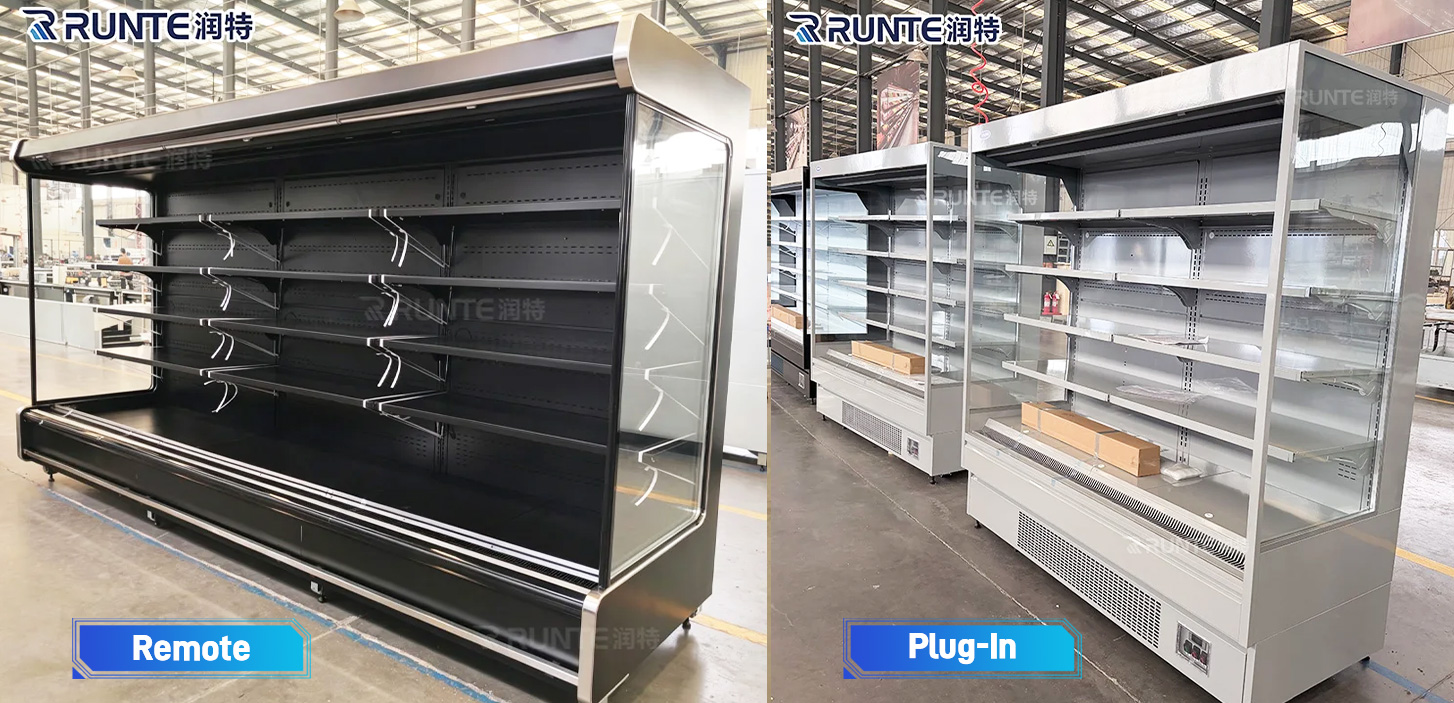
● Remote Refrigerators: Deliver zero indoor heat and noise. All mechanical heat exhausts outdoors through external condensing units.
● Plug-In Refrigerators: Discharge compressor heat and operational noise directly onto the active sales floor.
2. HVAC & Electricity Burden:
● Remote Refrigerators: Significantly reduce store HVAC air-conditioning loads during high-ambient summer months.
● Plug-In Refrigerators: Increase indoor temperatures, forcing central HVAC systems to work harder to maintain climate control.
3. Initial Installation Costs:
● Remote Refrigerators: Higher initial investment; requires professional copper piping, brazing, and field refrigerant charging.
● Plug-In Refrigerators: Lower setup cost; simple “plug-and-play” installation without exterior refrigeration lines.
4. Store Layout Flexibility:
● Remote Refrigerators: Fixed equipment placement once copper lines are routed and brazed.
● Plug-In Refrigerators: High mobility; easy to relocate display cabinets during store floor plan renovations.
Sourcing Recommendations for Retail Formats
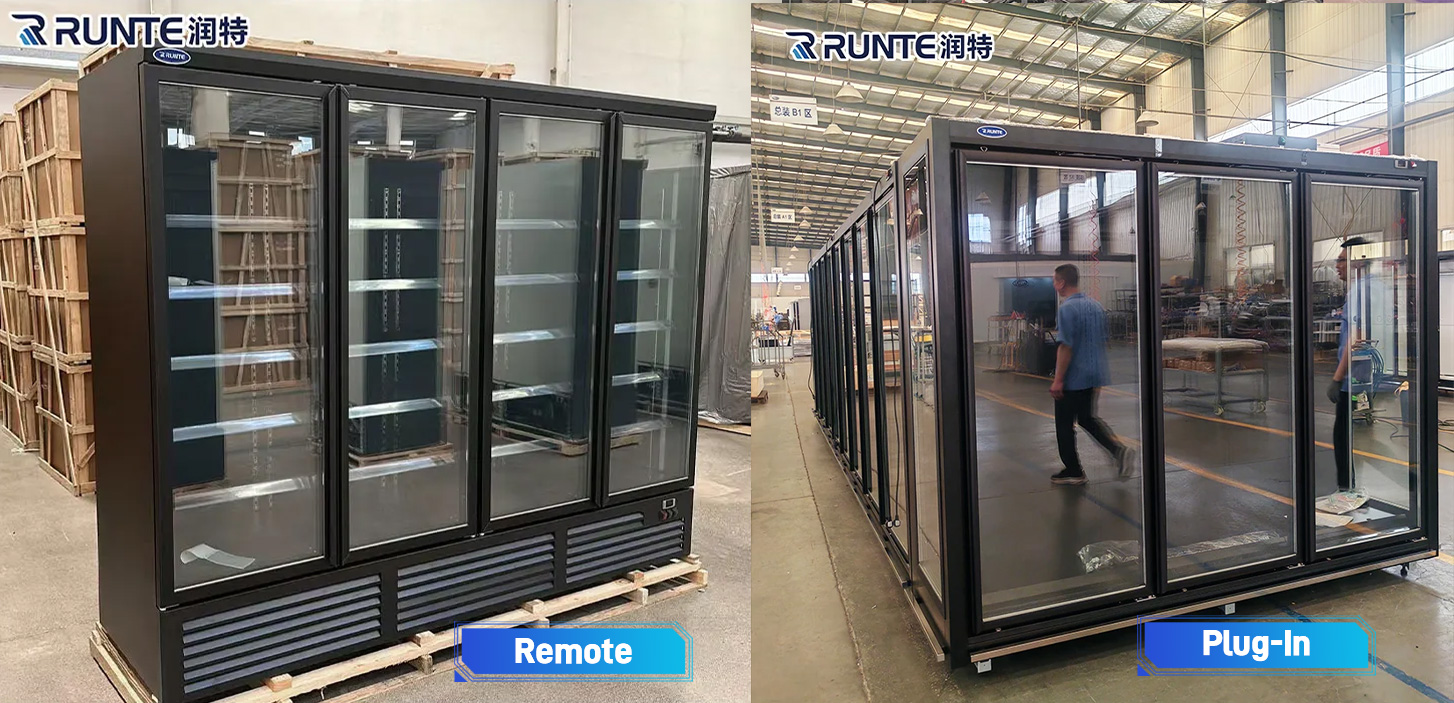
● Large Supermarkets & Hypermarkets: Choose remote refrigerators. Routing heat away from large display runs prevents store overheating, keeps aisles quiet, and delivers better energy ROI over multi-year operations.
● Convenience Stores & Micro-Markets: Opt for plug-in refrigerators. Their fast installation and mobility make them ideal for small footprints or rented storefronts where outdoor condenser placement is restricted.
Heavy-Duty Manufacturing by Runte
At Runte, both remote and self-contained refrigerators feature multi-layer air-curtain dynamics, low-E glass side panels, and automatic off-cycle defrosting. Powered by heavy-duty Bitzer or Copeland compressors operating with R290 eco-friendly refrigerant, our display systems maintain stable temperature preservation while minimizing total energy draw.
Technical FAQ: Refrigerator Selection
Q: Why do remote refrigerators save on supermarket air conditioning costs?
A: Plug-in compressors discharge 100% of their heat back into the retail floor, requiring double the HVAC energy to cool the building. Remote systems exhaust all condenser heat directly outside the building envelope.
Q: Can Runte customize remote condensing units for multi-deck refrigerators?
A: Yes. Runte engineers parallel rack systems and single-compressor condensing units tailored to exact store pipe runs, ambient outdoor temperatures, and multi-deck refrigerator loads.
Direct Factory Technical Support
● Contact Us: Send your store floor plan and cooling load requirements to a senior Runte export manager via WhatsApp/WeChat at +86 18560033539 for equipment selection advice, piping design, or direct factory wholesale pricing.
Post time: Jul-22-2026